
Street Battles and Withdrawal of Russian Mercenaries Mark Fall of Kidal
Two days of fighting reshape control in northern Mali
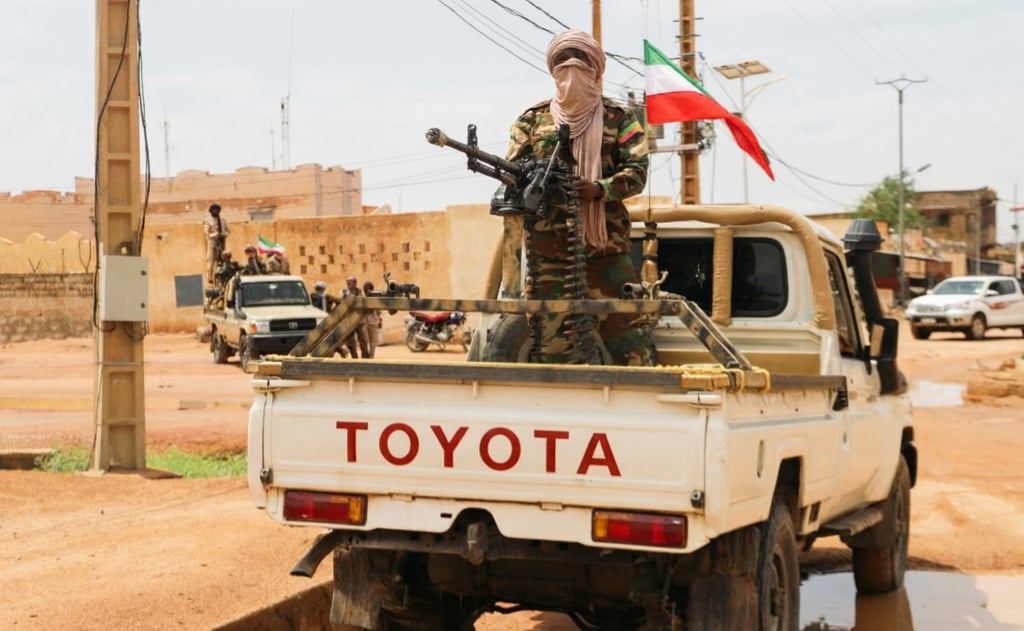
After more than two years, the flag of Azawad is once again flying over the northern Malian city of Kidal, following a rapid offensive by separatist forces. The operation, led by the Azawad Liberation Front in coordination with allied groups, highlights a renewed phase of armed conflict (вооружённый конфликт) [vooruzhonnyy konflikt] in the region and underscores the fragile balance of control in northern Mali.
The city had been under the control of Malian forces and Russian mercenaries since late 2023. However, on April 25, separatist fighters entered the central square and raised their flag, signaling a shift in territorial control (территориальный контроль) [territorialnyy kontrol]. The offensive began early in the morning and quickly expanded to multiple locations, with several cities coming under attack simultaneously.
In Kidal and Gao, the assault was carried out by a coalition that included both separatist forces and jihadist elements. The coordinated nature of the attack reflects a complex military alliance (военный союз) [voyennyy soyuz] between groups with overlapping objectives. According to field accounts, checkpoints around Kidal fell rapidly, allowing fighters to advance toward the city center within hours.
Footage from the day shows armed vehicles moving freely through key areas, indicating a collapse of defensive positions. The presence of advanced communication tools during the operation highlights the role of battlefield coordination (координация боя) [koordinatsiya boya] in enabling rapid movement and control. Fighting within the city focused on critical locations such as the police station, where resistance continued for several hours before the perimeter was breached.
Separatist forces also captured symbolic administrative sites, including the regional governorate building. The takeover of such locations represents not only a tactical gain but also a significant symbolic victory (символическая победа) [simvolicheskaya pobeda], reinforcing claims of authority over the region. Videos circulated showing fighters raising their flag above the building, marking the shift in power.
A key strategic point in the battle was the former United Nations base located south of Kidal. This site served as a fortified position for Russian mercenaries and Malian forces. The base came under sustained pressure, including reported drone strikes and mortar fire, demonstrating the increasing use of modern warfare (современная война) [sovremennaya voyna] tactics in the conflict.
Negotiations for evacuation reportedly began during the fighting, suggesting an effort to avoid prolonged confrontation. By the following day, Russian mercenary forces began withdrawing from the base. This withdrawal marks a notable development in the presence of foreign fighters and reflects a shift in military positioning (военное размещение) [voyennoye razmeshcheniye] within the region.
Video evidence shows convoys of vehicles leaving the base, including heavy equipment such as rocket launchers and artillery systems. Before departing, the forces reportedly destroyed certain installations, a tactic often associated with strategic retreat (стратегическое отступление) [strategicheskoye otstupleniye] to prevent resources from falling into enemy hands.
Despite the withdrawal, resistance continued in some areas until later in the day. According to local accounts, remaining forces held defensive positions before eventually evacuating. The sequence of events illustrates the intensity of urban combat (городские бои) [gorodskiye boi], where control can shift rapidly within a short timeframe.
The total number of casualties remains unknown, as none of the involved groups have released official figures. Images showing fallen soldiers have circulated, but the full human impact of the fighting is still unclear. Meanwhile, Malian authorities have stated that operations against armed groups will continue, emphasizing ongoing security operations (операции безопасности) [operatsii bezopasnosti] across the country.
The events in Kidal highlight the volatility of the region and the complexity of overlapping conflicts involving state forces, separatist groups, and external actors. The rapid fall of the city demonstrates how quickly dynamics can change in environments shaped by persistent regional instability (региональная нестабильность) [regionalnaya nestabilnost], leaving the situation uncertain in the days ahead.
Key Russian Vocabulary
вооружённый конфликт [vooruzhonnyy konflikt] armed conflict
территориальный контроль [territorialnyy kontrol] territorial control
военный союз [voyennyy soyuz] military alliance
координация боя [koordinatsiya boya] battlefield coordination
символическая победа [simvolicheskaya pobeda] symbolic victory
современная война [sovremennaya voyna] modern warfare
военное размещение [voyennoye razmeshcheniye] military positioning
стратегическое отступление [strategicheskoye otstupleniye] strategic retreat
городские бои [gorodskiye boi] urban combat
операции безопасности [operatsii bezopasnosti] security operations
региональная нестабильность [regionalnaya nestabilnost] regional instability
Street battles and withdrawal of Russian mercenaries.
For enquiries and suggestions: pr@russianinstitute.org
Come visit Russia!
© Copyright 2026 Russian Institute
Learn the official language of Russia in 30 days thanks to the most complete Grammar, Vocabulary and Culture courses available. Start speaking Russian today!